Sabi vs Tomo AI: Accountability Coach or Business Assistant?

Posted by
Latest Posts
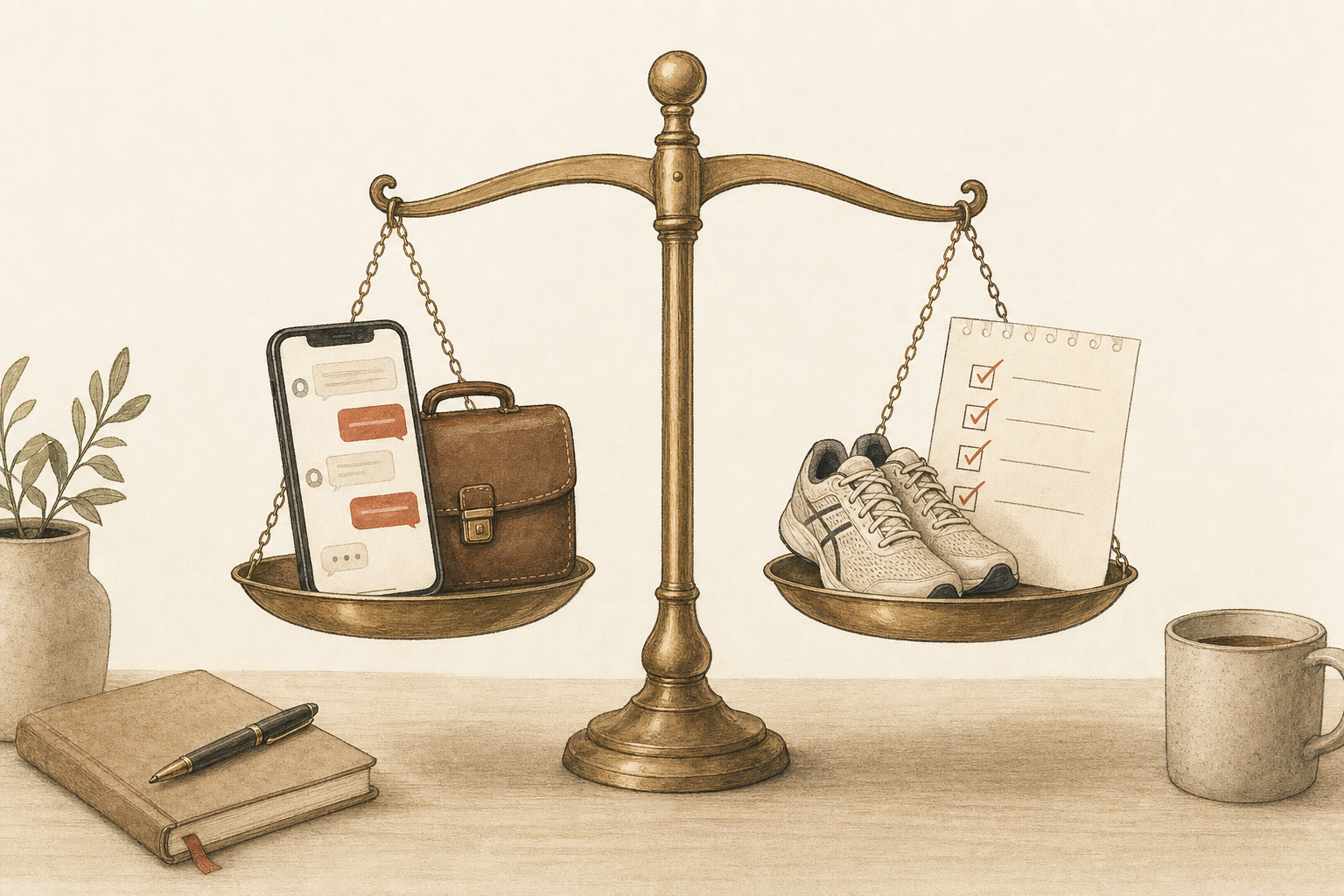
Sabi vs Tomo is a choice between two jobs: Tomo AI is a personal accountability partner that texts you about your goals, and Sabi is an AI executive assistant that runs your business admin over text. Both live in your messages. The right pick depends on whether you need a coach for your life or hands for your company. This comparison covers price, integrations, and support as of September 2026.
What is the difference between Sabi and Tomo AI?
Sabi is an AI executive assistant for business owners: she triages your inbox, books meetings, chases leads, and reports on your numbers from a text thread. Tomo is a personal AI accountability partner: it learns your goals, checks in first, and keeps you on track with habits, workouts, and budgets.
Tomo's About page says it plainly: "The parts of life outside work are what make us human." Its launch announcement describes users texting food photos for calorie tracking, bank statement screenshots for budgeting, and screen time reports for accountability.
We built Sabi for the work half of your day. You text her "follow up with the three leads from Tuesday and send me last month's Stripe revenue," and she does both.
Tomo AI is a coach for the parts of life outside work; Sabi is an AI executive assistant that does the business admin a founder would otherwise do at night.
 Sabi Sabi |  Tomo Tomo | |
|---|---|---|
| Category | AI executive assistant for business owners | Personal AI and accountability partner |
| Main job | Runs the business admin: inbox, calendar, follow-ups, reporting | Keeps you on track: goals, habits, reminders, check-ins |
| How you use it | Text and iMessage, email, Slack, web | iMessage and an iOS companion app |
| Who it is for | Founders and owners doing $10K to $100K per month | Anyone 13+ chasing personal goals |
| Company | Inovo Studios, United States | Mapo Labs, Inc., San Francisco; $5M seed led by Bain Capital Ventures (June 2026) |
Tomo's user count varies by source: its home page says 500,000+, its App Store listing says over 250,000, and the June 2026 release reported 10,000 paying subscribers.
How much does Tomo AI cost compared to Sabi?
Tomo AI pricing starts at $19.99 per month, and Sabi retails at $295 per month; a founding member special running now brings Sabi's price down significantly. The gap reflects the buyer: Tomo prices like a consumer habit app, and Sabi prices against the cost of hiring help for a business.
| Pricing | Sabi | Tomo |
|---|---|---|
| Retail price | $295/mo, month to month; currently running a founding member special that brings this down significantly | Base plan from $19.99/mo; App Store lists Tomo Pro at $19.99 and $119.99 |
| Founding offer | Founding member special open now: significant savings for early users | Promotions vary; "we cannot guarantee that everyone will get the same price" |
| Usage limit | Unlimited credits on Pro: put her to work as much as you want, no usage caps | Higher plans for "more expansive messaging limits" |
| Free start | Free starter credits, no card | Free app download; free trial only "if offered" |
| Refunds | Month to month, cancel anytime | Purchases "final and non-refundable" (terms) |
| Human support | AI-human hybrid: a human touches every ticket, and Sabi texts you when it is picked up and when it is fixed | Email [email protected] to reach a human |
A full-time US executive assistant costs $84K to $144K a year plus benefits, so both sit far below that line. Tomo's numbers come from its FAQ, terms, and App Store listing as of September 2026.
Tomo AI costs from $19.99 a month and prices like a consumer app; Sabi is $295 a month, and a founding member special running now brings that down significantly.
What can Tomo AI do for a business owner? (Tomo AI review)
Tomo AI helps a business owner with the personal side of the job: reminders, iMessage group chats, web search, and your calendar, email, Notion, and Google Drive. Its terms name Google, Notion, and Airtable, and its privacy policy adds Apple Health and group-chat scheduling on Google Calendar.
That is a good list for a person. What it does not list is the revenue stack most owners run on: no CRM, no Stripe, no QuickBooks, and no published integration count. Reviewers like the tone; one App Store review calls it like "texting a funny, helpful friend," and the app holds 4.8 stars from 195 ratings. Its Trustpilot rating is 3.0 out of 5 from 15 reviews, where reviewers cite slow replies (one reports 13 to 45 minutes per message) and the no-refund policy.
| Integrations | Sabi | Tomo |
|---|---|---|
| Count | 200+ live connections | No count published |
| Gmail, Outlook (read and send) | Email connection; Gmail via Google Workspace | |
| Calendar | Google Calendar, Outlook (book and move) | Google Calendar, including group-chat scheduling |
| Docs and data | Notion, Google Drive, Airtable, Google Sheets | Notion, Google Drive, Airtable |
| CRM | HubSpot, Salesforce, HighLevel, Jobber | Not listed |
| Money | Stripe, QuickBooks, Xero | Not listed; you text it bank screenshots |
| Health | Apple Health, Oura, Strava available | Apple Health; calorie tracking from food photos |
| Custom tools | We build the connection for you | Builds personal mini-apps (workout trackers, budgets) in its companion app |
Sabi connects to 200+ tools and acts in them, including the CRM and finance tools where leads and revenue live. We've seen owners save 15 to 25 hours a week within the first month once their inbox and follow-ups move to Sabi.
Tomo lists calendar, email, Notion, Google Drive, and Apple Health; Sabi's 200+ connections add HubSpot, Salesforce, Stripe, and QuickBooks, where a business owner's money moves.
If you are weighing other text-first assistants, see how Sabi compares to Poke and how Sabi compares to Martin.
Sabi vs Tomo: what do you get besides the software?
With Sabi you get a team behind the assistant; with Tomo you get the app and an email address. For a non-technical owner who does not want to learn another AI tool, that is the real split. Text-based AI assistants are getting common, so the layer around the assistant is what you are really choosing:
- AI-human hybrid. The AI does the work, and real people stand behind her. A human touches every support ticket, and Sabi texts you when someone picks it up and again when it is fixed.
- Unlimited credits. Sabi Pro is one of the only unlimited credit options: put her to work as much as you want, with no usage caps. Tomo sells higher plans for more messaging.
- A private community. A network of business owners and entrepreneurs using AI in your industry.
- High-level consulting. Pro members get weekly live calls with founders Stephen Diaz and Bruce van Zyl, real humans who know you by name.
- Step-by-step courses. AI Certification 1.0 and 2.0, sold for $1,000+ on their own, plus AI trainings built for your industry. Pro members can bring their team to the live team trainings.
| Beyond the app | Sabi | Tomo |
|---|---|---|
| Who you talk to when stuck | A human on every ticket; Sabi texts you when it is picked up and when it is fixed | Email "a (human) member of the Tomo team" |
| Live consulting | Weekly live calls with founders Stephen Diaz and Bruce van Zyl for Pro members | Not listed |
| Community | Private network of business owners using AI in your industry | Not listed |
| Courses and training | AI Certification 1.0 and 2.0 plus industry AI trainings; team trainings for Pro members | Not listed |
| Onboarding and education | Free AI trainings like the 1st AI Hire Challenge, open as soon as you start chatting with Sabi; weekly office hours and community calls for Pro members | None listed on the site |
| Custom connections | White-glove: we build the connection you need | None listed |
| Built-in playbooks | Business playbooks from a team with $55M+ in online sales | Personal goals: fitness, budgeting, habits |
| Memory in other AI tools | Sabi Brain (MCP) into Claude, ChatGPT, Cursor, rolling out | Remembers you inside Tomo; no export to other AI tools listed |
| Your data | Never sold or used to train AI; staff have no dashboard access to your content; download a copy any time | Never sells conversations; Google data not used for training (privacy) |
One example from our own queue: a pool service owner needed Sabi to work with a specialized software only pool companies use. There was no connector for it, so we built one for him. There is no builder, no workflow canvas, and no prompt engineering on your side; you text her.
The team behind Sabi has grown its own online businesses past $55M in sales (Inc. 5000 #148), and those playbooks are built into her, so you get the assistant plus the mentorship.
Sabi is an AI-human hybrid that pairs the assistant with a human on every ticket, unlimited credits on Pro, weekly founder calls, a private community, courses, and custom-built connections; Tomo pairs it with a friendly personality and email support.
Who should pick Tomo instead of Sabi?
Pick Tomo if the goal is you, not the business. If you want someone to text you first about the gym, log your meals from a photo, keep your budget honest, and cheer you on after a bad week, Tomo is built for exactly that, and it costs a fraction of Sabi.
Tomo also wins on two features Sabi does not offer: it joins iMessage group chats with friends, and its companion app generates custom trackers for each goal. If you want a personal coach with a sense of humor, Tomo is a strong pick. If attention and follow-through are the real problem, also look at how Sabi compares to Saner.
Pick Sabi if the pain is the business: 300 unread emails, leads going cold, a P&L nobody has read. That needs CRM and payment connections and a team you can call. Sabi is single-user today, so she is not a shared team tool yet.
For the rest of the field, see our full AI executive assistant comparison.
Tomo fits people who want an affordable accountability partner for personal goals; Sabi fits business owners who want the admin done and a human team behind it.
How to choose between an AI accountability coach and an AI executive assistant: step by step
Use the Coach-or-Operator Test: for each thing you would text an assistant this week, ask whether you need someone to push you to do it (a coach) or someone to do it for you (an operator), then pick the tool built for the bigger pile.
- Write down ten things you would text an assistant this week. Include the workout and the overdue invoice.
- Mark each one "coach" or "operator." "Remind me to run at 6" is coach. "Send the Henderson proposal and book a call for Thursday" is operator.
- Circle the operator tasks that touch a CRM, Stripe, or QuickBooks. Those need an assistant with read-and-write access to your revenue stack.
- Ask who you call when it breaks. If a missed follow-up costs you a client, pick the tool with humans on every ticket and weekly office hours for Pro members.
- Run the Coach-or-Operator Test again after one week. If coach tasks won, Tomo is a great fit; if operator tasks won, you need Sabi.
Common mistakes owners make comparing Sabi and Tomo
- Confusing accountability with delegation. A coach reminds you to send the invoice. An operator sends it. If your week is full of tasks, reminders add to the pile.
- Picking on price alone. $19.99 is the right price for a habit coach. It is the wrong frame for the follow-up that closes a $5,000 deal.
- Assuming "connects to email" means business-ready. Tomo lists calendar and email, but no CRM, Stripe, or QuickBooks. Check the tools where your money moves.
- Skipping the refund terms. Tomo's terms call purchases final and non-refundable, and prices can differ by user. Read them before you pick a plan.
- Ignoring the human layer. Many owners know they want help but need ideas on where the ROI is. We teach that in free AI trainings like the 1st AI Hire Challenge, and in weekly sessions for Pro members; an app alone does not.
FAQ
Q: What is Tomo AI? A: Tomo is a personal AI built by Mapo Labs, Inc. in San Francisco. It lives in iMessage and an iOS companion app, learns your goals, and texts you first to keep you on track with habits, fitness, and budgets. It raised a $5M seed round led by Bain Capital Ventures in June 2026.
Q: How much does Tomo AI cost? A: Tomo's FAQ says the base plan starts at $19.99 per month, with higher plans for more messages, and prices may vary by user. The App Store lists Tomo Pro at $19.99 and $119.99. Sabi retails at $295 per month, month to month, and a founding member special running now brings that down significantly.
Q: Is Tomo AI good for running a business? A: Tomo handles reminders, calendar, and email, but its site lists no CRM, Stripe, or QuickBooks connection. Sabi connects to 200+ tools, including HubSpot, Salesforce, Stripe, and QuickBooks, and acts in them for you.
Q: What is the best Tomo AI alternative for business owners? A: If you want an assistant that does the work instead of reminding you to do it, Sabi is the Tomo AI alternative built for owners. She runs your inbox, calendar, and follow-ups over text, with a human who touches every support ticket.
Q: What is an AI-human hybrid assistant? A: An AI-human hybrid assistant is AI that does the work with real people standing behind it. With Sabi, a human touches every support ticket, and Pro members get weekly live calls with the founders, a private community, and step-by-step AI courses. Tomo is an AI coach with email support.
Q: Can I use Sabi and Tomo together? A: Yes. Keep Tomo for workouts, meals, and personal goals, and Sabi for the business. They do not share memory, so keep client work in Sabi.
TL;DR
- Tomo AI is a personal accountability partner in iMessage; Sabi is an AI executive assistant that runs your business admin over text.
- Tomo starts at $19.99 per month and calls purchases non-refundable; Sabi retails at $295 per month, and a founding member special running now brings that down significantly.
- Tomo lists calendar, email, Notion, Google Drive, Airtable, and Apple Health; Sabi connects to 200+ tools, including HubSpot, Stripe, and QuickBooks.
- Tomo wins on price, personality, group chats, and custom goal trackers for personal life.
- Sabi is an AI-human hybrid: a human on every ticket, unlimited credits on Pro, weekly founder calls, a private community, courses, custom-built connections, and business playbooks.
- Use the Coach-or-Operator Test: if operator tasks win your list, pick Sabi.
The Better Pick for Business Owners: Sabi
Tomo keeps you accountable to your goals. Sabi takes the operator work off your plate so you have time to hit them, handling your business admin by text. Around the software you get:
- Unlimited credits on Pro: put her to work as much as you want, with no usage caps.
- An AI-human hybrid: a human touches every support ticket, and Sabi texts you when it is picked up and when it is fixed.
- Weekly live calls with founders Stephen Diaz and Bruce van Zyl for Pro members.
- A private community of business owners using AI in your industry.
- Step-by-step courses: AI Certification 1.0 and 2.0, plus the free 1st AI Hire Challenge when you try Sabi.
She is $295 a month flat, and a founding member special running now brings that down significantly.
More comparisons: Sabi vs Poke, Sabi vs Martin, Sabi vs Toyo, Sabi vs Catch, Sabi vs Saner, Sabi vs ohai
If your list came back mostly operator tasks, meet Sabi or text her. Setup takes about 60 seconds, and the first credits are on us.