Best AI Agent for Small Business: Why Free Isn't Cheap (2026)

Posted by
Latest Posts
The best AI agent for small business is the one that works inside the tools you already run, writes from proven business playbooks, and has real humans behind it when something breaks. In September 2026 alone, Meta, OpenAI, and a well-funded startup each pushed a free or bundled agent, so the price gap has never looked wider.
This post is the long version of the answer I gave live on a call when a member named James heard the founding member price of Sabi Pro and typed: "too expensive, it's the cost of 4 to 5 other AI platforms." He's right about the price. My answer focused not on the cost, but on what it's worth, and why we're seeing hundreds of business owners switch from free, generic AI tools to AI assistants like Sabi, built specifically for their industry.
What free AI agents launched for business owners in 2026?
Three big ones landed within a few weeks of each other, and all three are free or bundled into something you already pay for.
- Meta Muse launched in the US in September 2026 and is free to use for up to 100M tokens per week, with paid tiers for heavier use.
- Instinct is an invite-only beta that costs $0 today with no published price, and its terms say pricing can change at any time.
- ChatGPT Dots began rolling out on September 29, 2026 to ChatGPT Pro and Business Premium subscribers, with one agent included in those plans.
These are good products built by smart teams. They're also built for hundreds of millions of people at once, which means they're built for nobody's business in particular.
Free AI agents in 2026 are general-purpose consumer products; a small business needs an agent that fits its specific CRM, its offers, and its way of selling.
Why do business owners pay more for an AI agent?
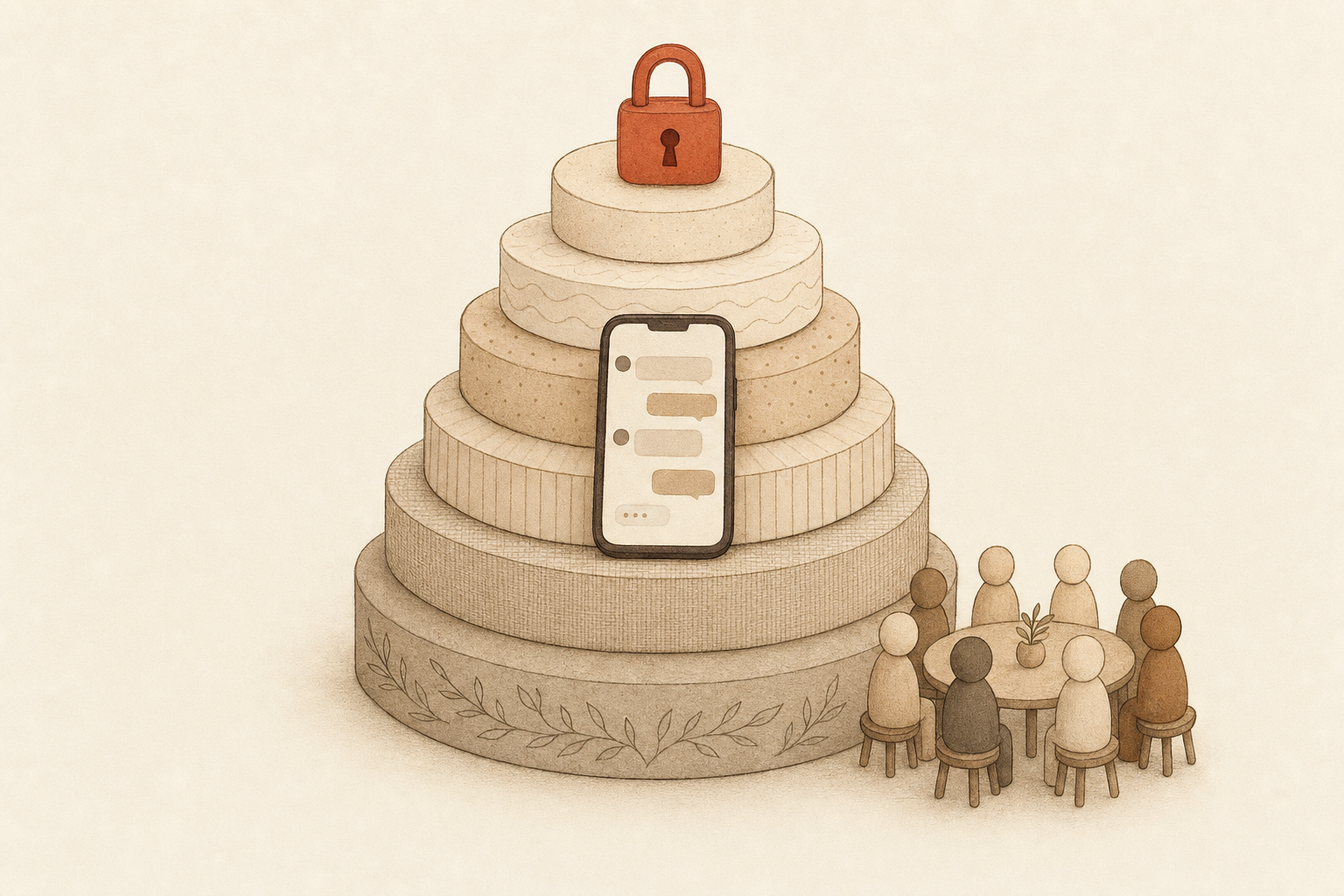
Business owners pay more when the agent comes with layers a free tool can't staff: custom connections, proven playbooks, human support, community, education, and data they own.
I call this the 6-Layer Test: before you compare prices, check whether an AI agent gives you each of these six layers, because the model underneath is quickly becoming a commodity and the layers around it are not.
| Layer | What to ask | Free consumer agents | Sabi Pro |
|---|---|---|---|
| 1. Connections | Will it work with my stack? | Popular apps only | 200+ tools, Pro requests prioritized and built |
| 2. Playbooks | Is the advice proven in market? | General internet knowledge | Skills built from real 7 and 8 figure businesses in your industry |
| 3. Support | Can I reach a human? | Help center and endless bot loops | Every ticket touched by a human (and a fellow business owner) |
| 4. Community | Who's in the room with me? | None, you're on your own | Member feed plus weekly founder calls |
| 5. Education | Will I get better at AI? | None, figure it out yourself | AI Certification 1.0 and 2.0 included, plus free team access to live trainings |
| 6. Data | Do I own and control my data? | Depends, and you're often locked into their ecosystem | Export any time, never sold to advertisers or used for training |
Here's each layer, and why it's worth more to small, family-owned businesses.
The 6-Layer Test scores an AI agent on everything around the model, because two agents running the same model can deliver very different results for a business.
Will the AI agent connect to the tools my business actually uses?
Only if someone builds the connection, and at a big company that someone isn't working for you.
Free agents connect to the famous apps: Gmail, Google Calendar, Slack. Your business probably also runs on a white-label CRM, a niche booking tool, a membership platform, or a payment processor nobody at a billion-dollar company has heard of. That's usually where owners get stuck trying to make AI work.
Sabi connects to 200+ business tools today, including the big ones like HighLevel, QuickBooks, Stripe, Shopify, and HubSpot, but also the niche ones you've never heard of unless you're in that industry, like Skimmer for pool companies. And the tools our realtors live in, like the MLS and Zillow, are being built right now because our members asked for them.
Here's the thing: when a Sabi Pro member submits a feature request, a human reads it, it gets prioritized, and our team builds it. So our connection library isn't built on what we think will be popular. It's built for our members, based on what they need.
Think of it like having a developer on your team whose job is getting your AI agent working inside your current systems, so you don't have to write code and hope it works.
For a Sabi Pro member, a missing integration is a feature request a human team builds, not a dead end you have to code around yourself.
Is AI advice from real business experience better than generic AI?
Yes, because output quality depends on what the agent was taught, and most agents were taught the average of the internet.
Ask any general AI for a VSL script and you'll get the framework it found online. When you ask Sabi for a VSL, she loads a skill built from the same scripts used by 20+ businesses each doing $1 million a month through VSLs.
Webinars work the same way: the skill carries our own experience running millions of dollars through webinars, plus what we learned from the hundreds of thousands we invested in training with world-renowned trainers like Russell Brunson, Jason Fladlien, Alex Hormozi, and the list goes on.
When you ask Sabi for a social media idea, she draws on the playbook of our head of marketing, who grew the socials of people like Grant Cardone and Gary Vaynerchuk, and our own account to 700,000 followers.
Sales scripts come from the playbook that grew our sales team to $1 million a month. And it's not only growth playbooks. My businesses have done over $55M in online sales and at one point we had 120 employees. We also had a year where we laid off more than 100 people. The survival playbooks from that year are in Sabi's brain too.
This isn't cookie-cutter growth advice. You're getting expert wisdom from the trenches of real businesses, working right now.
Sabi also builds memories as she works with you, so the answer fits your offer and your voice instead of needing a rewrite.
Sabi's skills for VSLs, webinars, and sales scripts come from real businesses doing $1 million a month, not from a generic framework found on the internet.
What happens when your AI agent breaks and you can't reach a human?
With the generic AI agents out there, you're on your own, and for a business that's a real risk that causes real delays.
Most big AI companies route support through help centers and bots. People get locked out of accounts, hit billing problems, and loop through chatbots with no way to reach a person. That's annoying for a personal assistant. It's dangerous once AI is running trusted processes your business depends on.
Customers agree. A 2026 Gartner survey of more than 3,500 customers found that nearly 9 in 10 say companies using generative AI for support must also make a human agent available.
With Sabi, you report an issue by texting her. It goes straight to a human with heart on our team, often another business owner who understands your industry and pain points. Sabi even updates you when a person picks it up and again when it's solved. No black hole.
Every Sabi support ticket is handled by a human, and Sabi texts you when someone starts on it and when it's fixed.
Why does an AI community matter for business owners?
Because momentum comes from people, and no AI can replace a room of founders who are a few steps ahead of you.
When I was going through hard seasons in business, community is what kept me going. Sabi Pro includes a member feed where founders post wins and real examples of how they're using Sabi every day. It also includes weekly live calls on Zoom with Bruce and me, where members share wins, mastermind ideas, and get consulting on their business.
For context, an hour of consulting with me is $5,000. Pro members can get on a call with us every single week. Many firms charge five figures for this kind of engagement; an ai consultant for small business is often the first hire owners make, and it's included in Sabi Pro.
This is also the layer big companies can't copy. A weekly Zoom for a free agent would have 70,000 people on it, with no chance of personalized attention or advice. We're a small, family-owned business serving small, family-owned businesses, so we can actually know our members and their businesses by name.
Sabi Pro includes weekly live calls with founders Stephen Diaz and Bruce van Zyl, something no venture-scale AI company can offer to millions of free users.
Does an AI agent teach you how to use AI?
Most don't; they hand you a tool and a help article.
Sabi Pro includes an education layer: live trainings, workshops, resources, and two AI certifications, AI Certification 1.0 and 2.0. Those programs sold on their own for $1,000+, and hundreds of people bought them at that price. Today they're included with Sabi Pro.
Your team can learn too. Pro members can invite their team to a dedicated calendar for our live team trainings, so everyone gets up to speed on AI at no extra cost, even though Sabi herself is just for you today.
Sabi Pro includes two AI certifications that previously sold for over $1,000, so your team learns AI while your AI does the work.
The real question: who owns your data when you use a free AI agent?
You've heard it said: when it's free, you are the product. Your data is how those companies make their money, so read the business model, because it tells you what the company does with what you connect.
Meta reported $196.2 billion in advertising revenue out of $201 billion total for 2025, which is about 97.6% of the company's revenue. When a company that earns nearly all its money from ads asks you to connect your inbox, calendar, payments, and deepest thoughts to its agent, ask why. I wrote up exactly what I found in why I won't connect my business to Meta Muse yet.
Instinct's terms, per this breakdown of its pricing and terms, let it train AI models on your data by default unless you opt out.
Sabi works the other way. Your emails, calendar, and business data are never sold or used to train AI models. Our staff have no dashboard access to your content, and support access is recorded in an access log. You can download a copy of your data any time and delete your account from your account page. The full details are on Sabi's security and privacy page.
That's why a lot of owners are moving their most trusted connection, an AI right-hand assistant, to Sabi Pro. They want a detailed, organized second brain that's theirs, that they can export, and that isn't locked into one platform. Sabi Brain, which lets other AI tools like Claude and ChatGPT read your Sabi memories, is rolling out now.
Sabi never sells your data or uses it to train AI models, and you can export everything and leave any time.
How to decide if a paid AI agent is worth it: step by step
- List your five most important tools. Include the niche ones. Check whether the agent connects to each, and what happens if it doesn't.
- Ask it for one real deliverable. A sales script, ad idea, or email sequence for your actual offer. Compare it to what a free tool gives you.
- Test the support path. Find out whether a human answers, and how you'll hear back.
- Price the extras separately. Add up what you'd pay for consulting, a mastermind, and an AI course on their own.
- Read the business model. Ads, data training, or subscription. That tells you whose interests the agent serves.
- Run the 6-Layer Test. Score each layer, then compare prices.
Common mistakes when choosing an AI agent for your business
- Comparing sticker prices only. A free agent plus a consultant, a course, and a developer to wire up your CRM costs far more than one paid plan.
- Assuming "4,000 apps" means your apps. Big catalogs skip white-label and niche business tools. Check yours by name. If Sabi doesn't have yours, you're one support ticket away from our team building it for you.
- Treating support as an afterthought. The day your automations stop is the day you need a human, and that's the day you find out whether one exists.
- Ignoring who pays the bills. If you aren't the paying customer, your data may be the product.
- Going it alone. Owners who learn AI with a community stick with it. Owners who don't often quit in the first month.
FAQ
Q: What is the best AI agent for small business in 2026? A: The best AI agent for small business connects to your specific tools, writes from proven business playbooks, and has human support behind it. Sabi is built for that; free consumer agents like Meta Muse and Instinct are built for personal tasks at massive scale.
Q: Are free AI agents good enough for a business? A: For personal errands and simple tasks, often yes. For running parts of a business, free agents usually lack niche integrations, human support, and clear data terms.
Q: How much does an AI agent cost for a small business? A: Consumer agents range from free to about $100 a month in usage tiers. Sabi is $295 a month flat, and a founding member special running now brings that down significantly.
Q: Does Sabi use my data to train AI models? A: No. Sabi never sells your data or uses it to train AI models, and you can download or delete your data any time from your account page.
Q: Who is Sabi not right for? A: If you only want a free assistant for shopping and personal bookings, a consumer agent is fine. Sabi is single-user today, and a human executive assistant still wins on in-room judgment.
TL;DR
- The best AI agent for small business is judged on six layers, not the model: connections, playbooks, support, community, education, and data.
- Meta Muse, Instinct, and ChatGPT Dots all launched free or bundled agents in 2026, built for mass consumer use, not with the small, privacy-minded business owner in mind.
- Sabi Pro members get feature requests built by a human team and every support ticket handled by a person.
- Sabi's skills come from businesses doing $1 million a month through VSLs, webinars, and sales teams.
- Sabi Pro includes weekly founder calls and two AI certifications that sold for $1,000+.
- Meta earned about 97.6% of its 2025 revenue from ads; Sabi never sells or trains on your data.
The Better Pick for Business Owners: Sabi
Sabi isn't the cheapest AI agent. It's the one with a team, a community, and a proven playbook behind it, built by a small family business for small family businesses. If it's not for you, totally okay.
If it is, meet Sabi and get set up in about 60 seconds. Just text her and see why hundreds of founders are making the switch from thinking about the cost to seeing what it's worth: an investment in their whole AI journey in a technology landscape that changes every week.